
Key Takeaways
- In a 2022 Nature study, it was found that a specific variant in the ERAP2 gene increased the likelihood of surviving the Black Death by approximately 40%.
- Hybridization capture allowed researchers to obtain high-resolution data from samples containing an average of 2% human DNA, requiring only five million reads per individual compared to the billions needed for whole-genome sequencing.
- The same genetic adaptations that protected ancestors from the plague are now linked to increased risks for autoimmune and inflammatory disorders in modern populations.
In 2022, a landmark study titled “Evolution of immune genes is associated with the Black Death” was published in Nature. Since its release, the article has achieved extraordinary reach, garnering more than 216,000 accesses and 210 citations. According to Altmetric, it is currently placed in the 99th percentile of tracked scientific literature and ranking 4th among similar-aged articles in Nature.
We sat down with Dr. Jennifer Klunk, one of the lead authors and the current Senior Product Manager of Genomics Services to discuss the technical innovations and historical revelations of this work.
What does this study reveal about the impact of the Black Death on human evolution?
Dr. Klunk: In this study, we used a tightly dated ancient DNA sample set to determine whether there exists a signal of selective pressure on immune-related loci due to the Black Death – and the answer was yes!
Then, we looked to identify variants that exhibited a strong signal of selective pressure. We found four strong candidates and our top candidate variant was in a gene called ERAP2, which is a known contributor to immune response to modern day diseases. The allele that we identified as protective appears to have increased the chances of survival during the plague by as much as 40%, which is a really dramatic effect.
Our next step was to confirm that the variant that we identified is directly involved in the immune response to Yersinia pestis and what that involvement looks like. What we found is that the protective allele increases ERAP2 expression in relation to the deleterious allele and that more copies of the protective allele allow for better restriction of intracellular replication of Y. pestis.
With these results, we were able to determine that we had found a variant that was under selective pressure due to the Black Death and show that it is involved in the immune response to Y. pestis. This is an exciting result because it is empirical evidence that connects selective pressure to a specific disease event. The protective ERAP2 variant is still around today, and in fact, it is present at pretty high frequencies. However, this variant has been linked to autoimmune and inflammatory disorders in modern populations, suggesting that there is a cost to maintaining this variation in the population. What we are seeing, then, is balancing selection in action – the benefit of defense against pathogens like Y. pestis seems to be counterbalanced against the cost of immune disorders.
Why was hybridization capture the key to unlocking these insights?
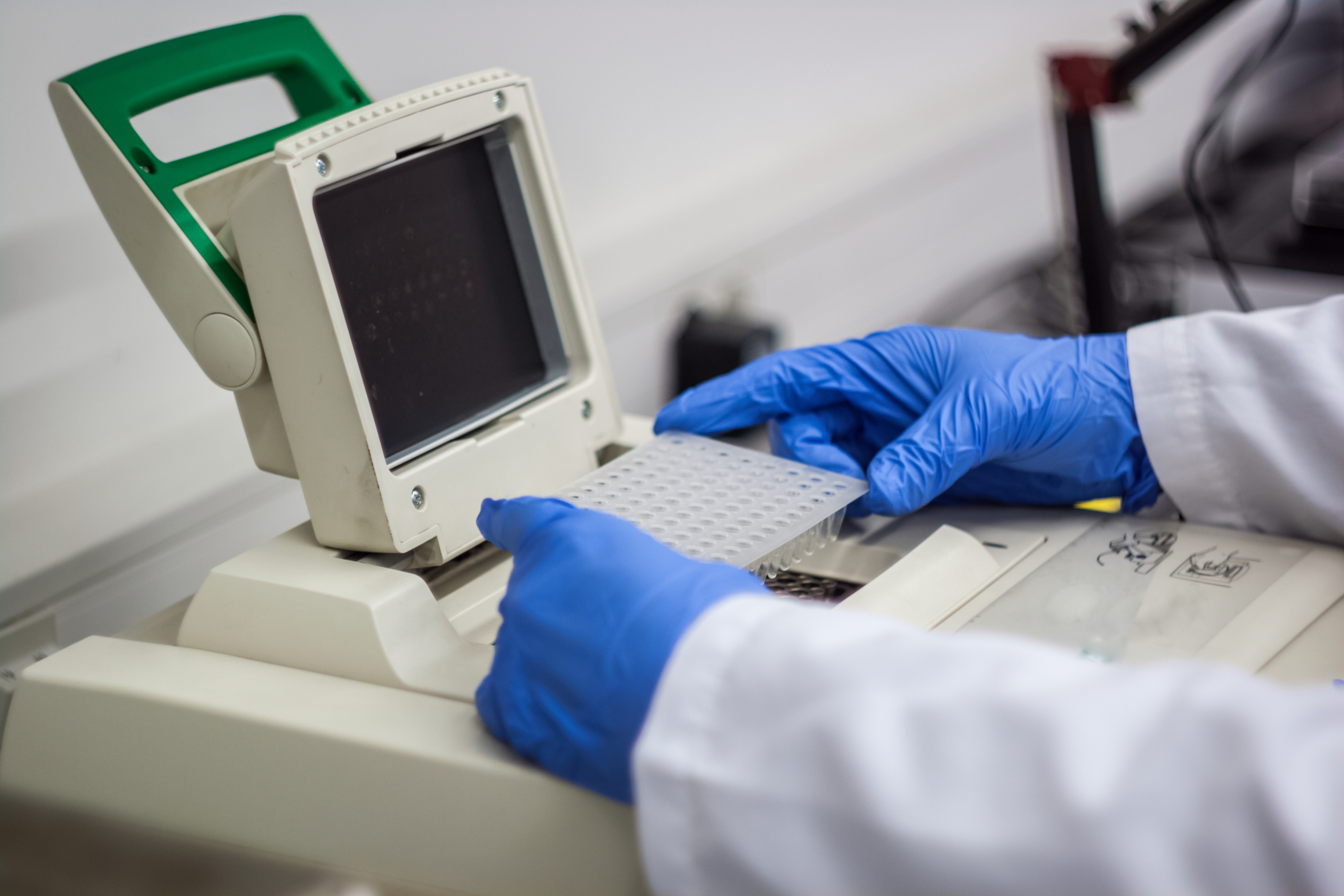
Dr. Klunk: When we screened our samples, they contained an average of only 2% human DNA. Using whole-genome sequencing (WGS) would have required billions of reads per sample to get deep coverage of our targets, which was economically and technically unfeasible.
By deploying myBaits custom targeted capture kits, we focused our sequencing efforts precisely on the loci of interest. This allowed us to get the data we needed with only five million reads per individual, enabling a much larger sample size, over 300 individuals, than WGS would have permitted.
What was your favorite part of this project?
Dr. Klunk: I was fortunate enough to be able to travel to London to collect small samples from the skulls of some of the individuals who died during and after the Black Death. Handling these individuals’ remains not far from where they were originally buried really put the work we were doing into context for me.
The full research article was published in Nature in October 2022 and is available to read here.
Optimize Your Targeted NGS Workflow
Whether you are investigating zoonotic spillover, tracking antimicrobial resistance, or working with highly degraded specimens, Daicel Arbor Biosciences offers the expertise to support your research. Explore our myBaits custom hybridization capture kits or contact us for a consultation on your project from design through bioinformatic analysis.
 Bluesky
 X
 Linkedin
 Place order
 Quote request
 Support
 Cart