
Overview
UCEs are highly conserved genomic regions flanked by variable sequences used for phylogenetics. Sets of UCE loci have been identified for various taxonomic groups, including vertebrates, insects, and more. Our myBaits UCE panels offer lower per-reaction costs and are in stock and available for immediate shipment.
- Predesigned – Designed by experts and ready for immediate use.
- Proven results – Ever-expanding list of peer-reviewed publications.
- Analysis pipelines – Simple, user-friendly data analysis.
- Cost-effective – Use one bait set across multiple distantly related taxa.
Want data even faster? Our expert myReads NGS services can process thousands of samples using UCE probe sets to move your project forward.
Additional info on the utility of UCEs for genetic research can be found at UltraConserved.org.
myBaits kits are for research use only and are not validated for diagnostic or therapeutic purposes.
Available panels
Check back as we continue to expand our collection of UCE panels–or contact us to suggest a new addition.
Vertebrates
UCEs: Tetrapods 5K version 1
This set of 5,472 baits (120 mer) targets 5,060 UCEs from tetrapods/amniotes. The 5k probes are known to enrich ~4k loci in birds and reptiles, 2-3k loci in mammals, and up to 1k loci in amphibians. The bait list can be downloaded from ultraconserved.org. It was first described in: BC Faircloth, JE McCormack, NG Crawford, MG Harvey, RT Brumfield, TC Glenn. (2012.) Ultraconserved elements anchor thousands of genetic markers for target enrichment spanning multiple evolutionary timescales. Syst Biol
UCEs: Tetrapods 2.5K version 1
This set of 2,560 baits (120 mer) targets 2,386 UCEs from amniotes. The 2.5k probes are known to enrich ~2.2k loci in birds and reptiles and ~1k loci in mammals. These baits have not been tested extensively across all tetrapods. The bait list can be downloaded from ultraconserved.org. It was first described in: BC Faircloth, JE McCormack, NG Crawford, MG Harvey, RT Brumfield, TC Glenn. (2012) Ultraconserved elements anchor thousands of genetic markers for target enrichment spanning multiple evolutionary timescales. Syst Biol. This bait set has also been used for phylogeographic studies by BT Smith, MG Harvey, BC Faircloth, TC Glenn, RT Brumfield. (2013) Target capture and massively parallel sequencing of ultraconserved elements (UCEs) for comparative studies at shallow evolutionary time scales. Syst Biol
UCEs: Acanthomorph/Percomorph Fishes 1K version 1
This set of 2,628 baits (120 mer) targets 1,314 UCE loci present in Acanthomorph (Percomorph) fishes. The baits can be downloaded from https://ndownloader.figshare.com/files/11188235. The baitset was first described in: Alfaro ME, Faircloth BC, Harrington RC, Sorenson L, Friedman M, Thacker CE, Oliveros CH, Cerny D, Near TJ. (2018). Explosive diversification of marine fishes at the Cretaceous-Palaeogene boundary. Nature Ecology & Evolution
UCEs: Metazoa 1Kv1
This set of 10,749 baits (120 mer) targets 1022 UCE loci present across the Animal Kingdom. The bait sequences can be downloaded here. These were designed by and first described in: Derkarabetian, S., Lord, A., Angier, K., Cosgrove, J. G., Frigyik, E., González-Delgado, S., Jordan, B., Rodríguez-Flores, P. C., Sato, S., Shapiro, L., & Giribet, G. (2025). Covering All Bases: A Universal Metazoan UCE Probe Set to Democratize Phylogenomics. Genome Biology and Evolution, 17(11). Also see: Raeker et al. (2025). The big, the small and the weird: A phylogenomic analysis of extant Priapulida. Molecular Phylogenetics and Evolution 204, 108297.
UCEs: Ostariophysan Fishes 2.7K version 1 - NEW!
This set of 6,737 baits (120 mer) targets 2,708 UCE loci present in Ostariophysan fishes. The baits can be downloaded from Figshare. The baitset was first described in: Faircloth BC, Alda F, Hoekzema K, Burns MD, Oliveira C, Albert JS, Melo BF, Ochoa LE, Roxo FF, Chakrabarty P, Sidlauskas BL, Alfaro ME (2018). A target enrichment bait set for studying relationships among ostariophysan fishes. BioRxiv.
UCEs: Ray-finned Fish (Actinopterygians) 0.5K version 1
This set of 2,001 baits (120 mer) targets 500 UCEs from fish. The 0.5k Actinopterygian probes are known to enrich 300-400 loci from ray-finned fishes. The bait list can be downloaded from ultraconserved.org. It was first described in: BC Faircloth, Sorenson L, Santini F, Alfaro ME. (2013). A Phylogenomic Perspective on the Radiation of Ray-Finned Fishes Based upon Targeted Sequencing of Ultraconserved Elements (UCEs). PLoS ONE
Invertebrates
UCEs: Agaricales 2Kv1
This set of 7736 baits were designed from the genomes of Pterula nudihorta and Leucoagaricus gongylophorus to target 2121 loci (UCEs) conserved across the Agaricales (Agaricomycetes; Basidiomycota). Bait sequences can be downloaded here. Results are described in: Schultz, T.R., J. Sosa-Calvo, M.P. Kweskin, M.W. Lloyd, B. Dentinger, P.W. Kooij, E.C. Vellinga, S.A. Rehner, A. Rodrigues, Q. Montoya, H. Fernández-Marín, A. Ješovnik, T. Niskanen, K. Liimatainen, C.A. Leal-Dutra, S.E. Solomon, N.M. Gerardo, C.R. Currie, M. Bacci, Jr., H.L. Vasconcelos, C. Rabeling, B.C. Faircloth, V.P. Doyle. 2024. The coevolution of fungus-ant agriculture. Science 386 (6717), 105-110.
UCEs: Arachnida 1.1K version 1
This set of 14,799 baits (120 mer) targets 1,120 UCEs from the Arachnida (spiders, mites, scorpions, harvestmen, and kin). The bait list can be downloaded here. It was first described in: BC Faircloth (2017.) Identifying Conserved Genomic Elements and Designing Universal Probe Sets To Enrich Them. Methods in Ecology and Evolution. The phylogenetic utility of this bait set was demonstrated in: J Starrett, S Derkarabetian, M Hedin, RW Bryson, JE McCormack, BC Faircloth. (2016.) High Phylogenetic Utility of an Ultraconserved Element Probe Set Designed for Arachnida. Mol Ecol Resources
UCEs: Spider 2K version 1
This set of 15,015 baits (120 mer) targets >2,000 UCE loci present in spiders (Araneae). The baits can be downloaded in the Supporting Information ZIP file available here. The baitset was first described in: Kulkarni S, H Wood, M Lloyd, G Hormiga. (2020). Spider‐specific probe set for ultraconserved elements offers new perspectives on the evolutionary history of spiders (Arachnida, Araneae). Molecular Ecology Resources 20: 185-203
UCEs: Bivalvia 1.5Kv1
This set of 19,588 baits (120 mer) targets 1,513 UCE loci present within the class Bivalvia. The bait sequences can be downloaded here. These were designed by and first described in: González-Delgado, S., Rodríguez-Flores, P. C., and Giribet, G. (2024). Testing ultraconserved elements (UCEs) for phylogenetic inference across bivalves (Mollusca: Bivalvia) Molecular Phylogenetics and Evolution 198, 108129. Also see: Batistão et al. (2025). Ultraconserved element-based phylogenomics and siphonal traits illuminate the evolution of tellinoidean clams (Mollusca: Bivalvia: Tellinoidea). Zoological Journal of the Linnean Society 205, zlaf159.
UCEs: Insect Coleoptera 1.1K version 1
This set of 13,674 baits (120 mer) targets 1,172 UCEs from the Coleoptera (beetles). The bait list can be downloaded here. It was first described in: BC Faircloth (2017.) Identifying Conserved Genomic Elements and Designing Universal Probe Sets To Enrich Them. Methods in Ecology and Evolution.
UCEs: Decapod 1.3Kv1 8
This set of 20,304 baits (120 mer) targets 1,384 UCE loci present within decapod crustaceans and related malacostracan groups (lobsters, crabs, shrimp, crayfish, and relatives). The bait sequences can be downloaded here. These were designed by and first described in: Geburzi, J. C., Rodríguez-Flores, P. C., Derkarabetian, S., and Giribet, G. (2024). From the shallows to the depths: A new probe set to target ultraconserved elements for Decapoda and other Malacostraca. Frontiers in Marine Science 11, 1429314.
UCEs: Heterobranchia 2.2Kv1
This set of 57,606 baits (70 mer) targets 2,259 UCE loci present within Heterobranchia (gastropod molluscs). The UCE loci for analysis can be downloaded here. The bait sequences were designed by and first described in: Moles, J., and Giribet, G. (2021). A polyvalent and universal tool for genomic studies in gastropod molluscs (Heterobranchia). Molecular Phylogenetics and Evolution 155, 106996. Also see: Fernández-Simón et al. (2025). From marine sand to land and rivers: A combined phylogenomic strategy unveils the evolution of minute Acochlidimorpha slugs (Gastropoda: Heterobranchia). Molecular Phylogenetics and Evolution 213, 108443.
UCEs: Insect Diptera 2.7K version 1
This set of 31,328 baits (120 mer) targets 2,711 UCEs from the Diptera (true flies). The bait list can be downloaded here. It was first described in: BC Faircloth (2017.) Identifying Conserved Genomic Elements and Designing Universal Probe Sets To Enrich Them. Methods in Ecology and Evolution.
UCEs: Insect Hemiptera 2.7K version 1
This set of 40,207 baits (120 mer) targets 2,731 UCEs from the insect order Hemiptera (true bugs). The bait list can be downloaded from Figshare. The bait sequences were first described in: Faircloth BC (2017). Identifying conserved genomic elements and designing universal bait sets to enrich them. Methods in Ecology and Evolution. And first used in: Kieran TJ, Gordon ERL, Forthman M, Hoey-Chamberlain R, Kimball RT, Faircloth BC, Weirauch C, Glenn TC (2018). Insight from an Ultraconserved Element Bait Set Designed for Hemipteran Phylogenetics Integrated with Genomic Resources. Molecular Phylogenetics and Evolution.
UCEs: Insect Hymenoptera 2.5K version 2, Principal
An expanded version of the original HymV1 design, this set of 31,829 baits (120 mer) targets 2,590 UCE loci from the insect order Hymenoptera (ants, bees, sawflies, and wasps). The principal bait list can be downloaded from http://datadryad.org/resource/doi:10.5061/dryad.89n87. It was first described in: MG Branstetter, JT Longino, PS Ward, BC Faircloth. (2017). Enriching the ant tree of life: enhanced UCE bait set for genome-scale phylogenetics of ants and other Hymenoptera. Methods Ecol Evol
UCEs: Insect Hymenoptera 2.5K version 2, Ant-Specific
This set of 9,898 baits (120 mer) targets 2,524 UCE loci present in Hymenoptera and 16 nuclear exons (12 genes) commonly sequenced in insects. The UCE baits are a subset of the more diverse “principal” bait set, including baits from ant genomes only. The exon baits were designed from four distantly related ant species. The UCE and exon bait lists can be downloaded from http://datadryad.org/resource/doi:10.5061/dryad.89n87. The baitset was first described in: MG Branstetter, JT Longino, PS Ward, BC Faircloth. (2017). Enriching the ant tree of life: enhanced UCE bait set for genome-scale phylogenetics of ants and other Hymenoptera. Methods Ecol Evol
UCEs: Insect Hymenoptera 2.5K version 2, Ant-Bee-Specific
This set of 9,332 baits (120 mer) targets 2,545 UCE loci present in Hymenoptera and 12 nuclear exons (7 genes) commonly sequenced in insects. The UCE baits are a subset of the more diverse “principal” bait set, including baits from ant and bee genomes only. The baitset can be downloaded here. The baitset was first described in: Grab, H. et al. (2019) Agriculturally dominated landscapes reduce bee phylogenetic diversity and pollination services. Science 363(6424): 282-284.
UCEs: Insect Hymenoptera 1.5K version 1
This set of 2,749 baits (120 mer) targets 1,510 UCEs from the insect order Hymenoptera (ants, bees, sawflies, and wasps). The bait list can be downloaded from ultraconserved.org. It was first described in: BC Faircloth, MG Branstetter, ND White, SG Brady. (2015.) Target enrichment of ultraconserved elements from arthropods provides a genomic perspective on relationships among Hymenoptera. Mol Ecol Resources
UCEs: Insect Lepidoptera 1.3Kv1
This set of 14,363 baits (120 mer) targets 1,381 UCE loci present in Lepidoptera (butterflies, moths, and relatives). The baits can be downloaded from Figshare. The bait sequences were designed by and first described in: Faircloth BC (2017). Identifying conserved genomic elements and designing universal bait sets to enrich them. Methods in Ecology and Evolution.
UCEs: Metazoa 1Kv1
This set of 10,749 baits (120 mer) targets 1022 UCE loci present across the Animal Kingdom. The bait sequences can be downloaded here. These were designed by and first described in: Derkarabetian, S., Lord, A., Angier, K., Cosgrove, J. G., Frigyik, E., González-Delgado, S., Jordan, B., Rodríguez-Flores, P. C., Sato, S., Shapiro, L., & Giribet, G. (2025). Covering All Bases: A Universal Metazoan UCE Probe Set to Democratize Phylogenomics. Genome Biology and Evolution, 17(11). Also see: Raeker et al. (2025). The big, the small and the weird: A phylogenomic analysis of extant Priapulida. Molecular Phylogenetics and Evolution 204, 108297.
UCEs: Opiliones 1.9Kv1
This set of 16,513 baits (120 mer) targets 1,915 UCE loci present within Opiliones, a distinct order of Arachnids. Members are often referred to as harvestmen and daddy long legs. The bait sequences can be downloaded here. These were designed by and first described in: Derkarabetian, S., Lord, A., Angier, K., Frigyik, E., Giribet, G., 2023. An Opiliones-specific ultraconserved element probe set with a near-complete family-level phylogeny. Molecular Phylogenetics and Evolution 107887.
UCEs: Peracarida 1.7Kv1
This set of 7,648 baits (120 mer) targets 1701 UCE loci present within the superorder Peracarida. The bait sequences can be downloaded here. These were designed by and first described in: Iwasa-Arai T, Linse K, Andrade SCS, Giribet G (2025) Unpouching Peracarida relationships with ultraconserved elements. Molecular Phylogenetics and Evolution 26, 108523.
UCEs: Oestroidea UCE 2.5Kv1
This set of 5,117 baits (120 mer) targets 2,581 UCE loci present within the Oestroidea superfamily (blow flies, bot flies, and relatives). The baits can be downloaded from: https://datadryad.org/downloads/file_stream/430591. The bait sequences were designed by and first described in: Buenaventura, E., Lloyd, M.W., Perilla López, J.M., González, V.L., Thomas-Cabianca, A. and Dikow, T. (2021), Protein-encoding ultraconserved elements provide a new phylogenomic perspective of Oestroidea flies (Diptera: Calyptratae). Syst Entomol, 46: 5-27.
UCEs: Onychophora 1.4Kv1
This set of 19,267 baits (120 mer) targets 1,465 UCE loci present within Onychophora (velvet worms). The bait sequences can be downloaded here. These were designed by and first described in: Sato, S., Derkarabetian, S., Lord, A., and Giribet, G. (2024). An ultraconserved element probe set for velvet worms (Onychophora). Molecular Phylogenetics and Evolution 197, 108115. Also see: Lord et al. (2026). Genomic species delimitation reveals sympatry in Tasmanian egg-laying velvet worms (Onychophora: Peripatopsidae: Ooperipatellus Ruhberg, 1985). Invertebrate Systematics 40, IS25038. doi:10.1071/IS25038
myBaits kits are for research use only and are not validated for diagnostic or therapeutic purposes.
Performance

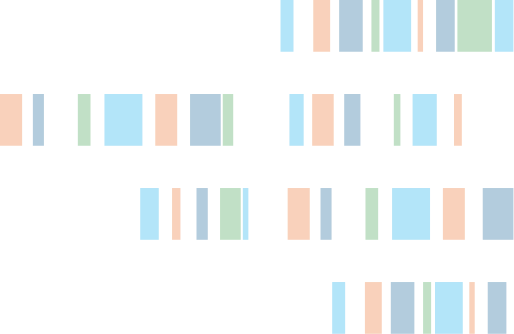
Example alignment of a 120bp UCE locus from the Tetrapods 5K baitset compared to the region containing the top BLAST hit in genomes of chicken (Gallus gallus), human, mouse (Mus musculus), and frog (Xenopus laevis. Individual bases are colored by degree of similarity between sequences (dark = high, light = low). The central 120bp UCE region is strongly conserved across all taxa, whereas immediate flanking regions are more divergent
myBaits kits are for research use only and are not validated for diagnostic or therapeutic purposes.
Resources
Protocol Tip: We recommend reviewing the published UCE literature associated with your panel of choice to see how other researchers utilized their myBaits reagents, including factors such as library insert length, sequencing depth, hyb/wash temp, and more.

myBaits kits are for research use only and are not validated for diagnostic or therapeutic purposes.
Publications
Journal of Hymenoptera Research | December 20, 2022
Molecular Phylogenetics and Evolution | October 1, 2022
Frontiers in Zoology | February 22, 2022
For more studies using UCE panels, please visit our comprehensive Publications database.


 Bluesky
 X
X Linkedin
 Place order
 Quote request
 Support
 Cart
Cart